
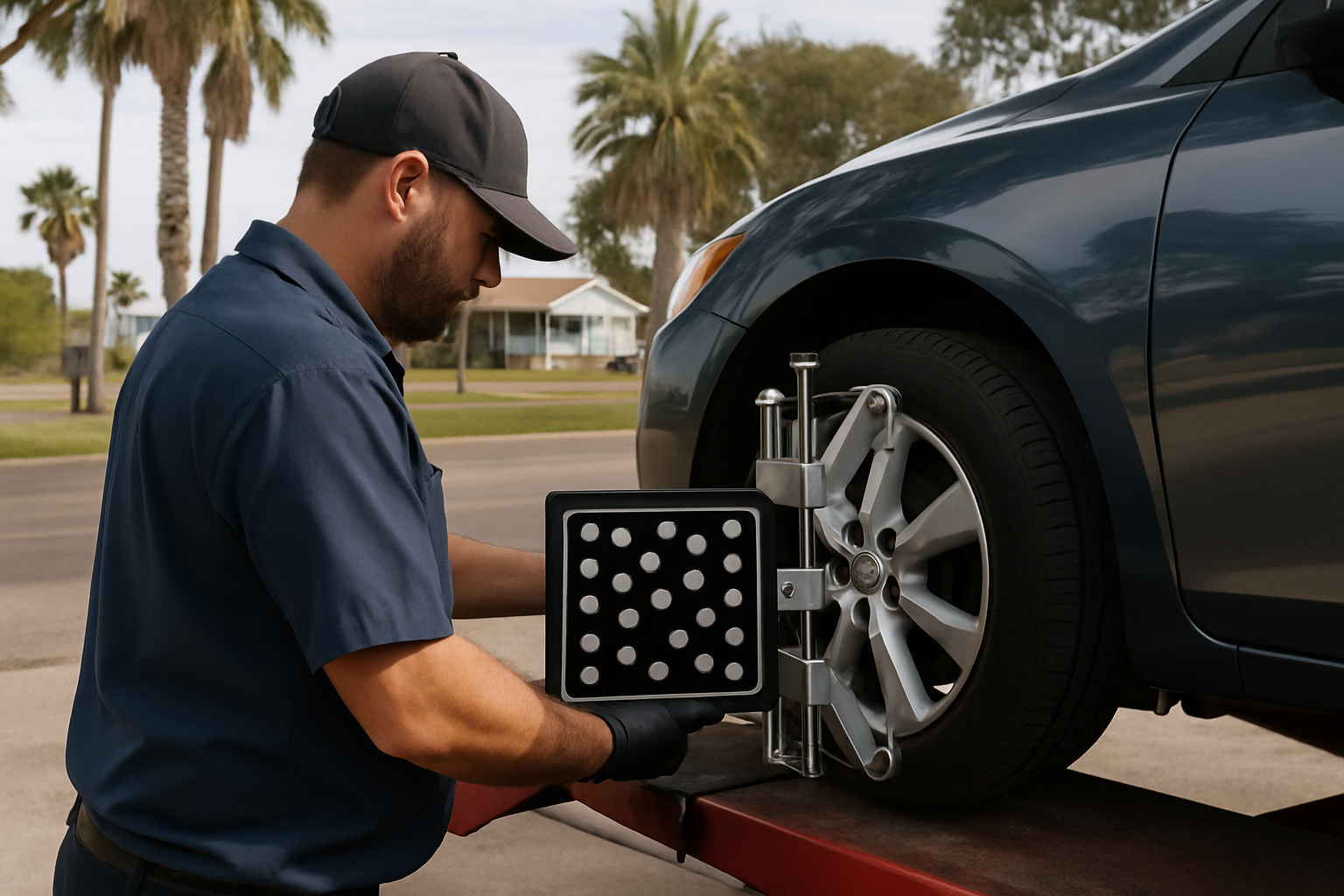
Wheel Alignment & Suspension in Mathis, TX
Subtropical Gulf Coast climate, slightly drier than coastal locations.
Coastal plain transitioning to brush country.
For wheel alignment & suspension, the service area covers roughly 30 miles from central Mathis.
Common reasons to call
- Vehicle pulling to one side
- Uneven tire wear
- Steering wheel off-center
- Vibration at highway speeds
- Post-lift alignment check
- Suspension component replacement
- Thrust angle adjustment
- Routine maintenance
- Hunter/Hofmann rack alignment
- Improved fuel efficiency
Typical work
- 2-wheel alignment
- 4-wheel alignment
- Thrust angle adjustment
- Suspension inspection
- Toe, camber, and caster correction
Typical turnaround
Same day service
Materials and equipment
- Alignment shims
- Camber bolts
- Tie rod ends
- Control arms
- Ball joints

Job sizes
Minor
low three-figure range
Standard
mid three-figure range
Major
high three-figure range
Replacement
variable by scope
Final pricing comes from the on-call provider after on-site assessment, with a written estimate before any work starts.
What to expect
- ✓ASE Certified Technicians ensure quality service.
- ✓Use of advanced Hunter/Hofmann alignment technology.
- ✓Alignment can extend tire life significantly.
- ✓Regular alignment checks improve vehicle safety.
- ✓Alignment services help maintain fuel efficiency.
ASE Certified Technician

Common questions
How often should I get a wheel alignment?
Typically, you should have your alignment checked every 6,000 miles or whenever you notice uneven tire wear.
What are the signs that my car needs an alignment?
Common signs include the vehicle pulling to one side, uneven tire wear, and a crooked steering wheel.
Can poor alignment affect fuel efficiency?
Yes, improper alignment can cause your vehicle to work harder, reducing fuel efficiency.
Is alignment necessary after replacing suspension components?
Yes, it's recommended to ensure proper handling and tire wear.
How does the Coastal Bend climate affect alignment?
Humidity and salt air can accelerate wear on suspension components, making regular checks important.
Do you use specific equipment for alignment?
Yes, we use Hunter or Hofmann alignment racks for precise adjustments.
Coastal Bend seasons
Spring (March - May)
Check alignment after winter potholes and road conditions.
Summer (June - August)
High temperatures can affect tire pressure, impacting alignment.
Fall (September - November)
Inspect alignment before winter for optimal handling.
Winter (December - February)
Road salt and debris can alter alignment settings.